 continuation:
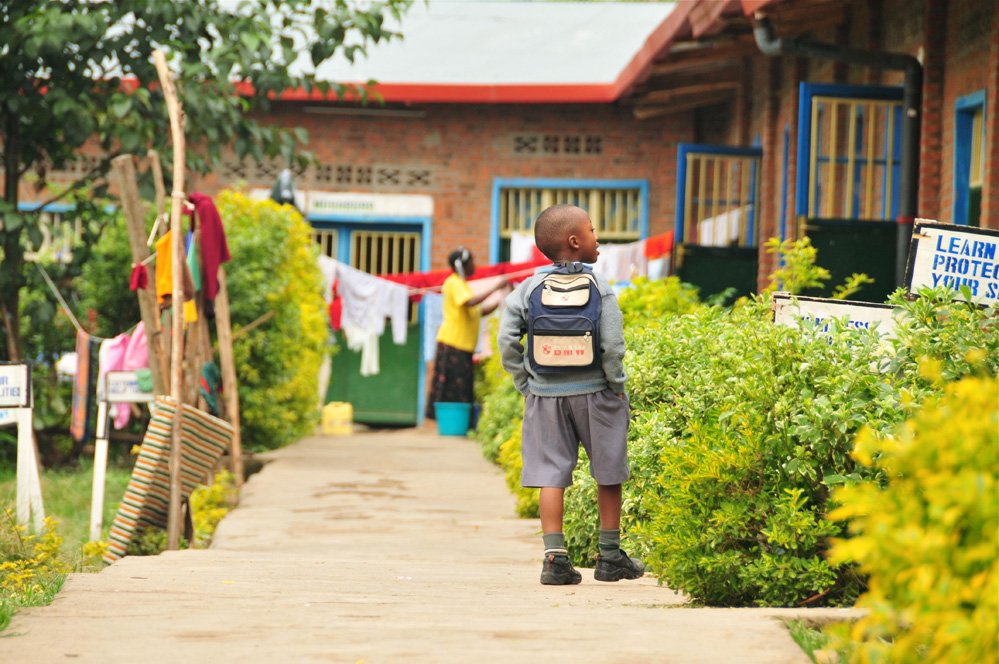
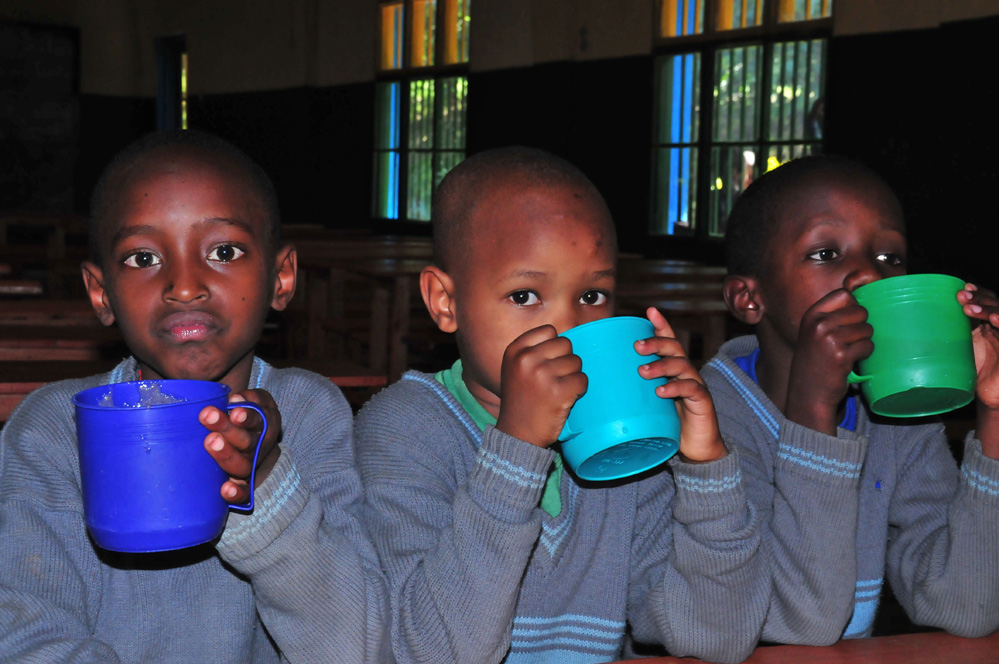
When I observe the children, running towards their 10 o’clock snack, consisting of a sweet pap handed out by their ‘matrons’, their apparent happiness and enthusiasm strike me deeply. It would be easy to think the general good humour derives from the food, but it remains exactly the same throughout the following hours and visits that I pay. Teachers are respectfully greeted and subsequently cuddled to near-death on every possible occasion. The smaller children simply adore them. I am not spared either: arms are wrapped around me and small hands glide into mine. When I caress them on the head I feel the typical stubborn hair, almost universally worn very close cropped. To make the distinction between the sexes is thus not always easy, but any confusion is quickly avoided: all boys wear knee breeches and all girls wear skirts.
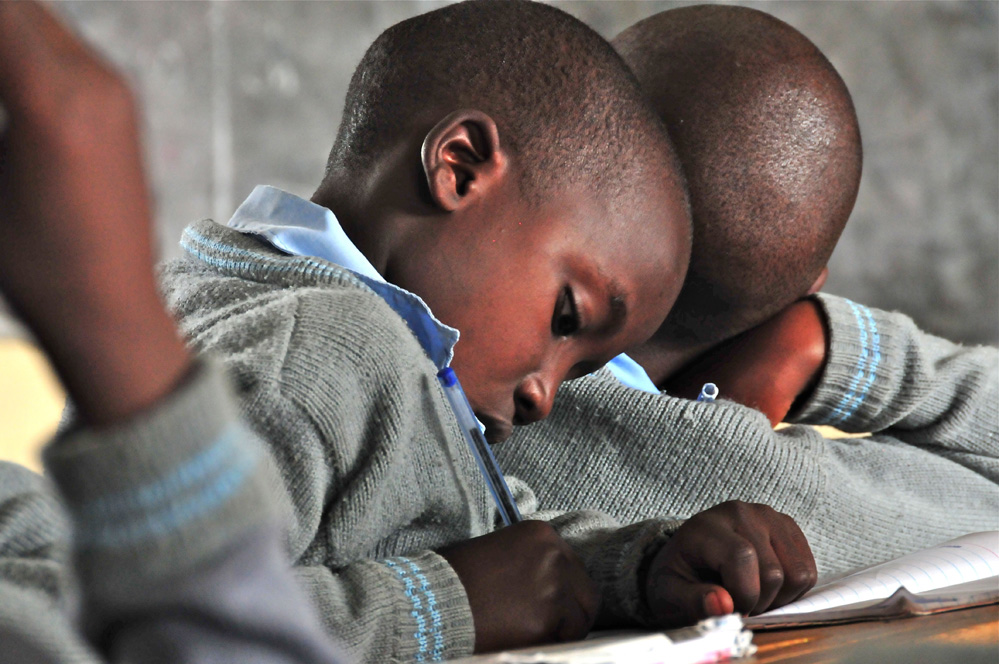
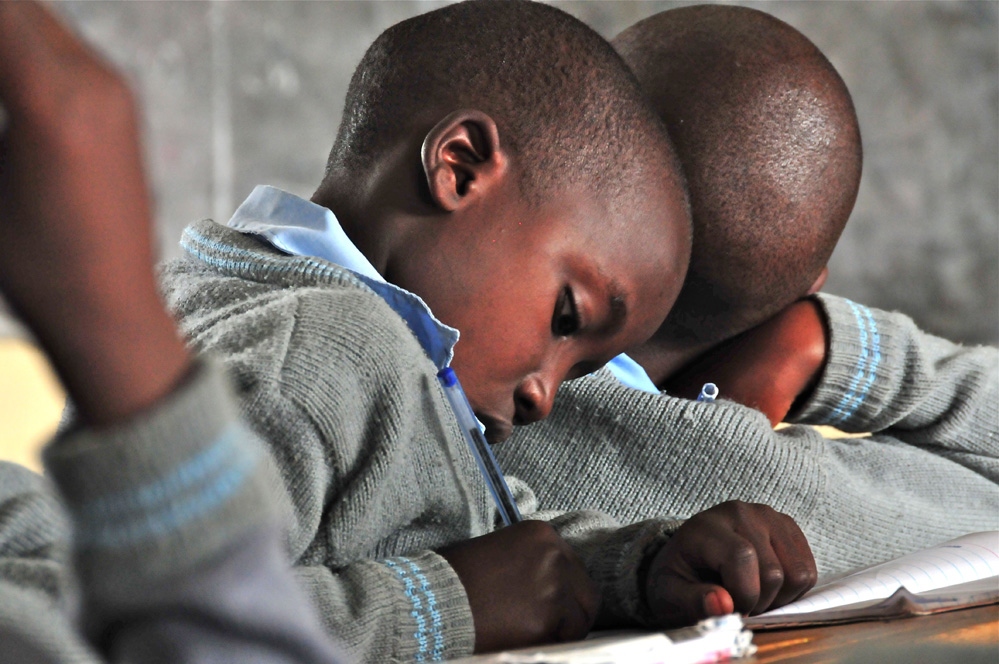
School starts very early, elder boarders get up at 05.00 am to study, lessons begin at 06.30. School ends at 16.30, after which a small service is being held. Although the foundation of the school is Baptist, all religions are welcomed and conversion is by no means an objective. English, recently promoted an official language in Rwanda, is the medium of communication and instruction. Some of the teachers are self-taught; it is not always easy to cope with the imposed language switch, but serious efforts are made by both young and old. Classes are huge, up to 50 children share benches and tables, every child taking his or her proper place and defending it, just as they do with their pens. Blackboards are painted and occupy an entire wall. Pupils may find themselves copying large amounts of text, which makes for good exercise. To step forward and write on the blackboard is a treat, as is wiping out the chalk, of which there seems to be a permanent shortage. Teachers are very encouraging and good answers are met with classical appraisal, whereas faults are lovingly rectified . Most teachers carry a small twig or stick but these, I am assured, are not used for caning, although they do have a deterrent effect. Correction with words, not by corporal punishment is the device, and given the affection from the pupils for their teachers I am prone to believe this.
Every Wednesday afternoon school excursions, debates and sporting competitions take place. Although already in possession of a varied and substantial syllabus, Wisdom has added a very essential subject to the curriculum: financial literacy. One can never start too early learning about the value of money and materials in a culture where these concepts are not firmly rooted in consciousness and society. Your belongings represent a certain value; taking good care of them and avoiding breaking them is important, because means for replacement are often scarce. And when you have earned or have been given a bit of money, you can spend it all at once, buying ice cream or candy, but you can also set apart some of it as a nest egg. Pupils are encouraged to start saving money, and can use their supply when necessities are needed.
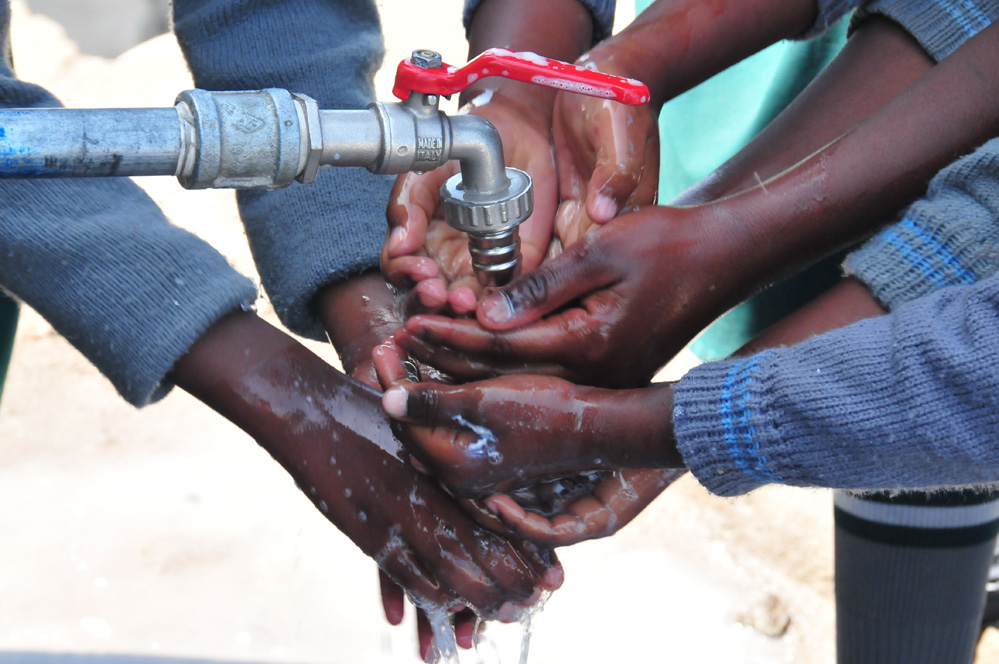
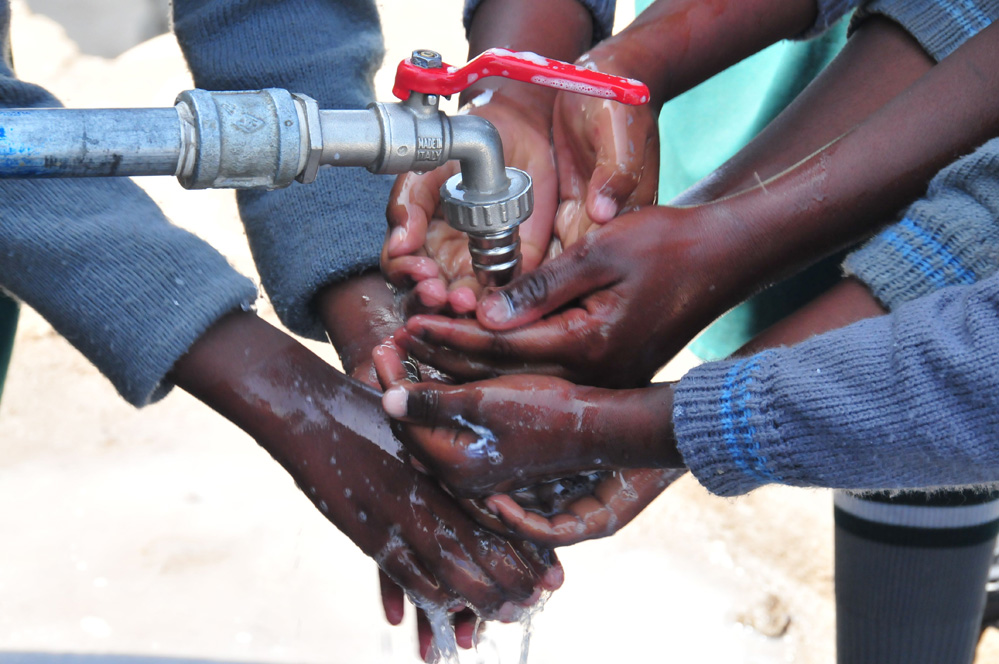
General care for the boarders lies in the hands of several matrons. These ladies see to it that personal hygiene is complied with and handle the laundry for groups of children varying in largesse from 30 to around 50. Given the fact that all laundry is done by hand, the sheer size of clothing brings them little solace. Clean shirts, shorts, skirts, socks, sweaters and underwear can be found drying scattered around the school-grounds. When a child is homesick or has bad dreams at night, the matron is there to sooth, fulfilling the role of a mother. To me this seems a very demanding task, especially since the matron also sleeps with the children, up to 40, in their dormitory, albeit in a cubby-hole erected with fibre-plate. Privacy is not easily found in these surroundings. However, the matrons foster “their” children wholeheartedly. A qualified nurse, male nowadays, can be consulted daily for aches and pains. Children with chronic diseases receive special care; those who are HIV-infected are taken to the hospital once a week for check-ups. To my surprise the most commonly found diseases are those of the respiratory system. Upon my frown the obvious is stated; after all this is a very cold and humid area. How could I forget that the perception of temperature is completely different here!
At one o’clock a hearty lunch is served to those who are entitled to it; some children can go home to eat or bring a lunchbox. The youngest children are served first, organized jostling takes place in the row, but finally all are seated in the large canteen. Teachers follow the same diet as the children, but sit separately in their own private quarter. Huge amounts of food are being consumed, save by those who don’t like this particular menu. It will be another six or seven hours before the next meal is served and on these long days lots of energy is needed .
Unfortunately I have not yet visited the Nyange Deaf Children Center (DCC), also part of the Foundation, but I will gladly do so when I next visit Musanze. By way of an experiment six hearing-impaired children from DCC were integrated at Wisdom Primary last year. Of them I have met three, while attending different classes. They proudly showed their faultless and neatly written homework and read “aloud” small stories in front of the class, using their elegant sign language. This reminded me of the wonderful book by Oliver Sachs, “Seeing voices: a journey into the life of the deaf”. He describes, amongst other things, the fact that sign language is actually a distinctive language and that over the ages many hearing impaired sadly have been mistaken for stupid and debilitated. The children I met at Wisdom have fully falsified such allegations, having been given the possibility to develop themselves. Sign language training has been given to all teachers and their hearing peers are very supportive. With all these positive notes I leave the school, cherishing hope for the future. The images and stories will stay with me for a long time.